

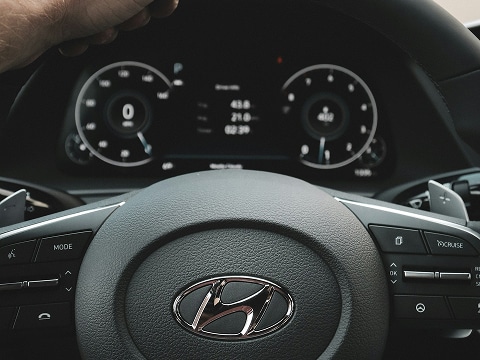
The tire pressure monitoring system (TPMS) warning light on your Hyundai's dashboard doesn't have to mean expensive trips to the service department. You can fix most TPMS issues in your driveway with simple reset methods that you can complete in just minutes. To learn how to reset a TPMS on your own or determine when it's time to call a professional, continue reading.
Understanding Hyundai's TPMS in 2025
Your Hyundai's TPMS is a federally required safety feature that's been saving lives since 2008. The National Highway Traffic Safety Administration has recorded an average of 11,000 car crashes each year, and over 600 people are expected to die annually due to improperly inflated tires. That's why this system is crucial for road safety. Hyundai introduced the TPMS in 2006 and equipped all its models by 2007, a full year ahead of the federal deadline.
Most modern Hyundai vehicles use direct TPMS technology, which accurately measures pressure to within 1 PSI. That's much better than older indirect systems that estimate based on wheel speed and can have a margin of error of 3 PSI or more. Direct TPMS captured 59% of the market in 2023, and because it's more reliable than indirect systems, the National Highway Traffic Safety Administration requires it in heavier vehicles weighing over 10,000 pounds.
However, the benefits go beyond preventing crashes. Proper tire pressure management can save you 3%-5% on fuel costs, extend the life of your tires by 15%, and reduce carbon dioxide.
Determining Why Your Hyundai TPMS Light Is On
In the Dallas-Fort Worth area, you can experience extreme temperature fluctuations, from 80 degrees to 40 degrees overnight, which can put stress on your vehicle. Your tires lose 1-2 PSI for every 10-degree drop in temperature. Chilly mornings can trigger your warning light. Other common causes include slow leaks from road debris, valve stem problems, or air gradually seeping through the rubber over time.
As your Hyundai gets older, sensor issues become more likely. TPMS sensor batteries typically last three to seven years, depending on how harsh your driving conditions are. The entire sensor system usually has a life span of five to 10 years or about 100,000 miles before needing replacement. Watch for warning signs that your sensor is failing. A solid TPMS light usually means low pressure, but a flashing light indicates that something's seriously wrong, such as a dead sensor battery, damage from tire sealant, or a complete sensor malfunction.
Resetting Your Hyundai TPMS
There are several methods for resetting your Hyundai's TPMS. The easiest method is automatic recalibration. First, check your tire pressure when the tires are cold, meaning your car hasn't been driven for at least three hours, or you've traveled less than a mile. Check your driver's-side door placard for the right pressure specs. For example, 2015-2020 TUCSON models need 35 PSI all around, while 2021-2024 TUCSON models vary from 35-40 PSI depending on your tire size and how much weight you're carrying. Once your tires are properly inflated, drive over 50 mph for 10-15 minutes to allow the system to recalibrate.
The manual reset method uses your TPMS reset button, but you'll need to check your owner's manual to locate it, as it's in a different place depending on your model. Press the reset button until the indicator blinks three times, then let go, turn off the car, turn it back on, and drive for 10 minutes. The whole process should take 20-30 minutes. You can also try the alternative inflation method. Fill your tires about 3 PSI over the recommended pressure, and then let all the air out before reinflating to the correct pressure.
If you're tech-savvy, you can try using an OBD-II scanner. These tools give you professional-level control direct from your garage.
Troubleshooting When the TPMS Light Won't Turn Off
Sometimes, when the TPMS light stays on, it could indicate a failed sensor rather than a pressure issue. TPMSs are vulnerable to corrosion and damage. When the sensor battery dies after its typical life span, you'll need to replace the entire sensor.
The cost of replacing your TPMS sensor depends on whether you do it yourself or have it serviced. Professional installation may be more efficient than the time and specialized tools you'd need to do it properly yourself.
Persistent TPMS alerts exist to prevent the dangerous blowouts and warn of issues that cause thousands of accidents every year. If your TPMS light keeps flashing after you've tried all methods, you'll need a technician with advanced diagnostic tools to read error codes from your car's computer. Professional diagnostics every six months are essential, especially during Texas' extreme weather seasons. If all else fails, you can try disconnecting the positive terminal of your car battery and discharging any stored power as a last resort before contacting a professional.
Getting Expert TPMS Service at Huffines Hyundai Plano
The certified technicians at our Huffines Hyundai Plano service center provide complete TPMS diagnosis, sensor replacement, and system programming using manufacturer-approved procedures and genuine original equipment manufacturer parts. They know every Hyundai model and have access to the latest diagnostic equipment and recall information. At Huffines Hyundai Plano, we provide upfront service estimates and efficient repair timelines that get you back on Texas roads safely. For professional TPMS service that puts your safety and your Hyundai's performance first, contact us at Huffines Hyundai Plano, where expertise meets genuine care for your driving experience.
Image by Jakob Owens | Licensed with Unsplash License


