

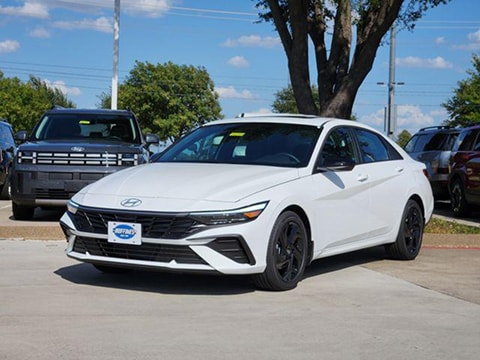
Choosing between two solid sedans from the same brand isn't always straightforward. In the Hyundai Elantra vs. Sonata debate, both cars earn plenty of praise, but they're built for different kinds of drivers. The Elantra prioritizes efficiency and easy maneuverability. The Sonata leans into space and refinement. Knowing what each one does best makes the decision a lot easier, whether you're commuting the Dallas North Tollway or planning weekend trips around North Texas.
Elantra vs. Sonata: Quick Overview
The Elantra is a compact sedan that appeals to buyers who want smart fuel economy, easy maneuverability, and a lower price of entry. It's a practical choice for daily commuters and first-time car buyers who don't want to compromise on modern features.
The Sonata is a midsize sedan with more room and a broader feature set, and it tends to appeal to families and drivers who spend significant time on the road. Both come loaded with technology and safety systems, and both carry Hyundai's reputation for long-term reliability, as reflected in ratings from J.D. Power and Consumer Reports.
| Elantra | Sonata | |
|---|---|---|
| Size class | Compact sedan | Midsize sedan |
| Efficiency lean | Stronger mpg, Elantra Hybrid up to 54 mpg combined | Solid mpg with more interior room, Sonata Hybrid up to 51 mpg combined |
| Power lean | Efficient base engine, N Line for extra punch | More standard power, N Line for performance |
| Best-fit driver | Solo commuters, first-time buyers | Families, frequent highway drivers |
Size and Space: Compact Efficiency vs. Midsize Comfort
The most fundamental difference between these two sedans comes down to size, and that difference shapes nearly every other part of the ownership experience. The Elantra fits into tight parking spots and handles city streets with confidence, built around doing more with less. Step up to the Sonata and you get a bigger footprint, one that pays off in passenger comfort and gives you real room for luggage and extra passengers.
Elantra's Cabin and Cargo Practicality
Inside the Elantra, the layout is clean and thoughtfully organized, with about 42.3 inches of front legroom and 38 inches in the rear, according to Hyundai's official specifications. Cargo space, roughly 14.2 cubic feet, is decent for a compact sedan and handles everyday needs like grocery runs or weekend bags without much trouble. Regularly haul larger items or pack for a longer trip with multiple passengers, though, and the Elantra's trunk capacity starts to feel limiting. You can explore our new Hyundai Elantra inventory in Plano to see how the cabin and trunk feel in person.
Sonata's Extra Legroom and Trunk Space
The Sonata's extra size pays off most noticeably in the rear seat, with around 34.8 inches of rear legroom paired with a more spacious 46.1 inches up front, per Hyundai's specifications. The trunk is also noticeably larger at roughly 15.6 cubic feet, making it a better match for families, frequent road-trippers, or anyone who tends to pack heavily. Strollers, sports gear, a full week of groceries, the Sonata handles that load with room to spare. If that extra space sounds appealing, browse our new Hyundai Sonata lineup to compare trims and available room.
Comfort, Refinement, and Driving Experience
Both sedans deliver enjoyable driving experiences, but they feel quite different behind the wheel. The Elantra has an energetic, responsive character that's fun in stop-and-go traffic and easy to place precisely on narrow roads. Get into the Sonata and that sportiness gives way to something more settled and composed, a ride that leans closer to a luxury feel, especially at highway speeds.
Elantra: Nimble and Efficient on the Road
Driving the Elantra around Plano or along Preston Rd feels natural. It's light and quick to respond, threading through traffic without much effort. The base engine makes roughly 147 hp, with the Elantra N Line stepping up to around 201 hp for drivers who want a little more energy without leaving the compact class.
For someone covering a lot of city miles each week, the Elantra's agility takes some of the mental load off driving.
Sonata: Smooth, Quiet, and Feature-Rich
Where the Elantra feels nimble, the Sonata feels polished. It absorbs road imperfections more gracefully, and its cabin runs noticeably quieter at speed thanks to better sound insulation. The base Sonata offers around 191 hp, and the Sonata N Line pushes output to roughly 290 hp for buyers who want a genuinely spirited midsize sedan. Higher trims also push closer to premium territory, with upgraded audio and more advanced driver assistance.
For North Texas highway commutes or longer trips to visit family, that quieter, more cushioned experience adds real value over time.
Technology and Available Features
On the technology front, both models hold their own. Standard equipment on both the Elantra and Sonata includes a touchscreen infotainment system, Apple CarPlay and Android Auto compatibility, and active safety features like forward collision avoidance and lane keeping assist, features that have helped both models earn strong safety marks from NHTSA and IIHS.
The Elantra's base trim comes with an 8-inch touchscreen, while the Sonata steps up with a larger 12.3-inch display. Both sedans come standard with LED projector headlamps. Move up in trim level and both gain more: premium audio, wireless charging, navigation, and driver-assistance packages that make highway driving notably more relaxed.
The Sonata tends to offer slightly more in its higher trims simply because there's more room in the vehicle to fit additional features, but both models deliver a tech experience well beyond their price points.
Value and Long-Term Ownership Considerations
Hyundai has built a strong reputation for offering genuine value without cutting corners on reliability, and both the Elantra and Sonata reflect that commitment. Where they differ is in how that value gets delivered and to whom it matters most.
Pricing and Affordability
The Elantra's lower starting price, around $22,625, makes it one of the more compelling options in the compact sedan segment. The Sonata starts closer to $27,450, a gap of roughly $4,800. For first-time buyers or anyone watching monthly payments closely, that lower Elantra entry point matters.
The Sonata's premium reflects its larger size and broader feature availability, and buyers who need what it provides will likely feel the extra investment is justified. Exact pricing, trim availability, and current incentives change over time, so we recommend confirming current figures directly with our team.
Fuel Efficiency and Maintenance Costs
The Elantra's smaller engine typically yields better fuel economy, with the standard model rated up to 35 mpg combined and the Elantra Hybrid reaching up to 54 mpg combined. The Sonata still delivers solid efficiency at roughly 32 mpg combined, or up to 51 mpg combined for the Sonata Hybrid Blue trim (47 mpg combined on the SEL and Limited Hybrid trims), while offering more interior room in exchange for a modest efficiency trade-off.
Over several years of ownership, either gap can add up for high-mileage commuters. Both models benefit from Hyundai's competitive maintenance costs and strong warranty coverage, and keeping up with routine care at our service center helps protect long-term reliability and resale value on either sedan.
Which Sedan Matches Your Lifestyle?
The decision usually comes down to how you actually use your car day to day rather than which model looks better on paper.
Choose the Elantra If You Want This
The Elantra makes the most sense if you're a solo commuter or someone who primarily drives around Plano and Collin County. It's fuel-efficient and easy to park, and it's priced accessibly without feeling stripped down. Rarely carry more than one passenger and don't need a large trunk for regular use? The Elantra covers your needs confidently while keeping costs down.
Choose the Sonata If You Want This
The Sonata fits better if you routinely drive with a full car, log significant highway miles, or just prefer a quieter, more comfortable cabin. Families benefit most from the added space, and anyone planning weekend drives to spots like Lake Texoma or Fair Park will appreciate the refined ride. Whatever your week looks like, the Sonata is worth the step up if you want a sedan that handles it all without compromise.
Explore Both Models at Huffines Hyundai Plano
Reading about two sedans can only take you so far. Getting behind the wheel of each one tells you far more than any comparison article can.
See Both Sedans in Person
Huffines Hyundai Plano, located at 909 Coit Rd. in Plano, Texas, carries a strong inventory of both the Elantra and Sonata across multiple trim levels, giving you a real sense of how each model fits your needs. The team takes a no-pressure approach: walk the lot on your own terms, book a test drive whenever it suits you, or explore financing online first.
Schedule Your Visit
Sales hours run Monday through Friday from 8:30 AM to 8 PM, and Saturday from 8:30 AM to 7 PM, giving you plenty of flexibility around your schedule. Browse current inventory and request information online before you visit, or reach us directly at 972-867-5000. You can also visit our contact page to get the process moving.
The Hyundai Elantra vs. Sonata question comes down to matching the right tool to your life. Whichever direction you lean, Huffines Hyundai Plano makes it easy to explore both without any guesswork.


