
Some drivers want a vehicle that signals capability the moment it pulls into a parking lot, something that looks just as comfortable on a trail as it does commuting through Plano traffic. That's the space the Hyundai XRT trim occupies. It bridges everyday practicality with outdoor-ready attitude, giving drivers a distinct package without pushing them into full off-road territory.
What Is the Hyundai XRT Trim?
The Hyundai XRT trim is a specific package applied to select Hyundai models, built to deliver rugged styling alongside real capability upgrades. This goes beyond a cosmetic refresh. Hyundai equips the XRT package with functional changes, including tougher exterior elements and increased ground clearance, plus terrain-ready components that boost performance once you leave the pavement. Think of it as Hyundai's way of offering adventure-ready style while keeping the comfort and reliability the brand built its reputation on.
What makes the XRT appealing is the balance it strikes. Drivers get a polished daily driver and a genuinely capable trail companion in one package, suited to active lifestyles across a range of driving conditions.
Origin and Meaning of the XRT Name
XRT is widely understood to signal rugged, terrain-ready styling, and that character comes through clearly in how the trim is designed. Hyundai developed the XRT identity for drivers who want their vehicles to reflect a more adventurous character, something that goes beyond the smooth performance and refined interiors that define most of the brand's lineup. The badge points to a vehicle built for more than city streets, without venturing into hardcore off-road territory.
Hyundai Models That Offer an XRT Trim
Hyundai currently offers the XRT trim on the Santa Cruz, Palisade, Santa Fe, Tucson, and the all-electric IONIQ 5. Among these, the Tucson, Santa Fe, and Palisade tend to be the most popular XRT choices. Buyers get real flexibility here, whether they need a three-row family SUV, a compact crossover for solo trips, or a truck-style vehicle built for hauling.
Each model shares the core XRT design language and capability philosophy while carrying the unique strengths of its own platform. The Santa Cruz XRT leans into the truck lifestyle with added utility, while the Tucson XRT delivers that trail-ready look in a more compact, city-friendly package. The IONIQ 5 XRT brings that same rugged attitude to an electric platform. Across the lineup, the XRT badge means the same thing: ready for whatever comes next. If you'd like to see which models are currently available, you can browse our new inventory to check for XRT-equipped options.
Rugged, Adventure-Ready Exterior Styling
The XRT's exterior is where the trim makes its boldest statement. Hyundai's designers didn't just add a few decals and call it rugged. The package brings gloss black side mirrors, black anodized XRT badging, and unique color accents that give the vehicle a noticeably tougher appearance. All-terrain tires and 18-inch dark alloy wheels round out the look while adding real function on loose or uneven surfaces.
The overall effect is a vehicle that looks capable and confident, staying polished enough for professional settings or weekend errands while hinting at genuine trail readiness. For Plano drivers splitting time between urban commutes and weekend outdoor escapes, that dual-purpose look hits a practical sweet spot.
Unique Wheels, Tires, and Ground Clearance
One of the most functional XRT upgrades involves what the vehicle rides on. XRT-equipped models get all-terrain tires built to handle gravel, dirt, mud, and uneven surfaces, paired with 18-inch alloy wheels in a dark finish. The tread pattern grips better than standard highway tires, and that difference shows up the moment conditions get rough.
Hyundai also raises ground clearance on XRT trims by up to 1.3 inches compared to standard trims. That extra height gives drivers room to clear obstacles without worrying about scraping the undercarriage. For someone who regularly visits state parks or takes gravel backroads within an hour of Plano to reach a campsite, this feature quietly delivers real-world peace of mind.
Distinct Color Accents and XRT Badging
Beyond the structural changes, XRT models carry a consistent visual identity built around contrast and attitude. Gloss black mirrors, black anodized accents, and dedicated XRT badges give the package a look you'd spot from across a parking lot.
The badging does more than look good. It signals that the vehicle was built with a specific purpose in mind, and Hyundai's color accent choices tend to complement bolder exterior paint options, so the whole package feels intentional rather than bolted on.
Interior Comfort Built for Active Lifestyles
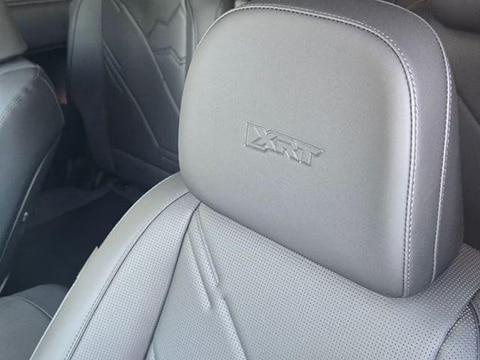
Step inside an XRT-equipped Hyundai, and the focus shifts from bold styling to smart practicality. Hyundai outfits the cabin with H-Tex® seating surfaces featuring an XRT logo, a durable material that handles wet gear and muddy boots without showing wear quickly. Heated front seats and, on models like the Santa Fe, a power sunroof add everyday comfort to the utility-focused design.
The XRT interior doesn't skimp on convenience to achieve that ruggedness. A hands-free smart liftgate makes loading gear easier when your hands are full, and you still get the touchscreen infotainment, wireless connectivity, and driver assistance features found elsewhere in the lineup. It's a cabin that works just as well for a weekend trip to a nearby lake as it does for a routine school run in Plano.
Capability Features That Support Off-Road Confidence
Beyond styling, the XRT trim packs mechanical features that back up its adventurous look. Hyundai makes HTRAC All-Wheel Drive standard on some XRT models like the Santa Fe and IONIQ 5, while offering it as an option on others such as the Tucson, where front-wheel drive is standard. In plain terms, HTRAC continuously sends power to whichever wheels have the most grip, so the vehicle stays steady on gravel, wet pavement, or a rutted trail without the driver having to do anything. Hyundai also optimizes thermal management on the XRT for better cooling under sustained load.
Towing capacity gets a boost too. On the Santa Fe, for example, the XRT can tow up to 4,500 lbs with trailer brakes, compared to 3,500 lbs on standard trims, useful for hauling a small boat or a loaded trailer to a lake for the weekend. Towing figures vary by model, but the pattern holds: XRT trims are built to handle more.
Every XRT also comes with Hyundai SmartSense, the brand's suite of driver-assist features, including Forward Collision-Avoidance Assist and Smart Cruise Control. These features won't compete with dedicated off-road vehicles, but they give XRT drivers a real confidence boost on forest service roads, gravel backroads, and rocky campsite approaches, all common scenarios within a short drive of Plano.
If you're weighing how an XRT fits your budget, it's worth getting pre-approved before you visit, so you can compare trims with financing already in hand.
XRT vs. Other Hyundai Trims: Key Differences
Hyundai builds its trim lineup around specific types of buyers. Standard trims like the SEL focus on core value and fuel efficiency, with AWD often available at extra cost. Higher-tier trims such as Limited or Calligraphy prioritize luxury finishes and premium technology. The XRT carves out a different lane: standard AWD, more ground clearance, tougher tires, and towing capability, all for a comparable overall value.
| Feature | XRT | SEL (Standard Trim) |
|---|---|---|
| Drivetrain/AWD | HTRAC AWD standard on some models (Santa Fe, IONIQ 5), optional on others (Tucson) | AWD often optional |
| Ground Clearance | About 1 in. more on Santa Fe, varies by model | Standard height |
| Tires | All-terrain | Standard highway |
| Towing Capacity | Higher (e.g., 4,500 lbs on Santa Fe) | Lower (e.g., 3,500 lbs on Santa Fe) |
| Styling | Blacked-out accents, XRT badging | Standard trim styling |
Luxury trims lean on leather upholstery and panoramic sunroofs. The XRT leans on all-terrain tires and skid-plate-style styling cues instead. Efficiency-minded trims chase better fuel economy; the XRT chases standard AWD and extra ground clearance. Both approaches make sense for the right buyer. The XRT simply fits someone who values capability and outdoor-ready style over polish for polish's sake.
Is the Hyundai XRT Trim Right for You?
The honest answer depends on how you actually use your vehicle. If your weekends involve trips to a nearby lake, camping, gravel backroads around Collin County, or towing gear for an outdoor trip, the XRT trim adds real value. Its combination of available or standard HTRAC AWD, all-terrain tires, increased ground clearance, and added towing capacity translates directly into a better experience once you leave paved roads.
If your priorities lean toward maximum luxury features or you drive almost exclusively on highways and city streets, one of Hyundai's other trims may serve you just as well, or better, without paying for capability you won't use. But if you want a vehicle that keeps up with an active lifestyle without forcing a choice between comfort and capability, the XRT offers a genuinely compelling middle ground.
Explore XRT-Equipped Hyundai Models at Huffines Hyundai Plano
If the XRT trim sounds like the right fit, Huffines Hyundai Plano is a great place to start your search.
What to Expect
Located at 909 Coit Rd. in Plano, we carry a strong inventory of new Hyundai models, including XRT-equipped versions across the lineup. Our team takes a no-pressure approach, giving you space to explore your options and ask the questions that matter most to you. Sales hours run Monday through Friday from 8:30 AM to 8 PM, and Saturday from 8:30 AM to 7 PM, if you'd like to see these vehicles in person.
Next Steps
You can browse our current inventory online, schedule a test drive, or stop by to see the XRT in person, still the best way to understand what sets it apart. For more information or a personalized walkthrough, visit our contact page or call 972-867-5000.


