

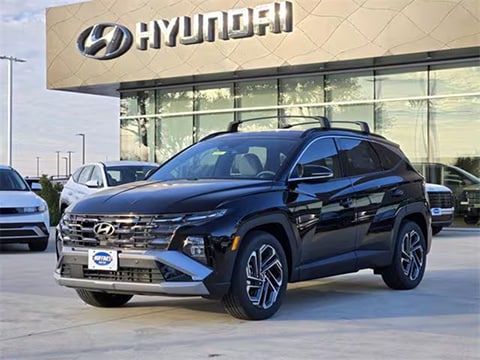
Shopping for a compact SUV means choosing between two solid but different approaches. At Huffines Hyundai Plano, we regularly help Plano and Collin County families work through this decision by cutting through the marketing noise and focusing on what actually matters for your daily life.
2026 Hyundai Tucson vs Nissan Rogue: Compact SUV Showdown
Here's the thing: the Tucson brings aggressive looks, advanced tech, and Hyundai's bulletproof warranty. The Rogue answers back with turbocharged zip, a thoughtfully designed cabin, and fuel economy that'll make your wallet happy. Both handle the family grind well, whether you're shuttling kids around or heading out for weekend getaways.
What we've noticed is that the 2026 Hyundai Tucson vs Nissan Rogue specs tell a story about priorities. Hyundai bets on long-term value through warranty protection and generous standard features. Nissan focuses on delivering immediate driving satisfaction with that turbo punch and smart interior touches.
Performance and Everyday Driving Experience
Powertrain Specifications
|
Feature |
2026 Hyundai Tucson |
2026 Nissan Rogue |
|
Engine |
2.5L 4-cylinder |
1.5L VC-Turbo 3-cylinder |
|
Horsepower |
187 hp |
201 hp |
|
Torque |
178 lb-ft |
225 lb-ft |
|
Transmission |
8-speed automatic |
Xtronic CVT |
|
Max EPA-Est. MPG (City/Hwy/Comb) |
25/33/28 |
29/36/32 |
|
Max Towing Capacity |
2,750 lbs |
1,500 lbs |
The Rogue's turbocharged three-cylinder is a neat piece of engineering. That 201 horsepower and 225 lb-ft of torque hits harder than the numbers suggest, giving you legitimate pep when merging onto Central Expressway. The Xtronic CVT keeps things smooth (though manual transmission fans might find it a bit disconnected). Modern turbo tech means you don't get that old-school lag that used to plague smaller engines.
Meanwhile, the Tucson goes with tried-and-true naturally aspirated power: a 2.5-liter four-cylinder putting out 187 horsepower and 178 lb-ft of torque. Sure, the Rogue edges it out on paper, but that eight-speed automatic feels more engaging than any CVT ever will. Where the Tucson really flexes is towing: 2,750 pounds versus the Rogue's 1,500 pounds. That's nearly double the capacity, which matters if you've got a boat or travel trailer in your plans.
Don't sleep on the electrified Tucson options either. The hybrid pairs a 1.6-liter turbo with electric assistance for 226 horsepower total. The plug-in hybrid cranks that up to 261 horsepower and gives you 33 miles of pure electric driving. Nissan simply doesn't have hybrid alternatives, so these variants completely shift the conversation.
Ride Quality and Efficiency
The Rogue prioritizes passenger comfort with suspension that smooths out Texas road imperfections beautifully. Highway cruising down Preston Road feels effortless, though you'll notice more lean when taking corners with enthusiasm. Fuel economy hits up to 32 MPG combined, keeping those DFW commutes affordable.
Tucson engineers went with a firmer setup that stays composed when you're loaded down with passengers and gear. Standard models deliver 28 MPG combined (about 4 MPG behind the Rogue), but here's where it gets interesting: the Tucson Hybrid jumps to 37 MPG combined, actually beating the Rogue when fuel efficiency becomes your top priority. The Tucson XRT throws in Terrain Mode selections (Mud, Snow, Sand) for those varied Texas conditions we sometimes face.
Interior Comfort and Passenger Space
|
Feature |
2026 Hyundai Tucson |
2026 Nissan Rogue |
|
Legroom (Front/Rear) |
41.4/41.3 in |
41.5/38.5 in |
|
Cargo Capacity (Min/Max) |
41.2/80.3 cu ft |
36.5/74.1 cu ft |
Seating and Materials
The Rogue's Zero Gravity front seats live up to their name. These things reduce fatigue on longer drives with thoughtful cushioning and decent side support. Back seat passengers get 38.5 inches of legroom, which sounds generous until you compare it to the Tucson's 41.3 inches. That extra 2.8 inches makes a real difference when you've got teenagers or adults riding behind you.
Hyundai steps up the materials game even in base Tucson trims. You'll find soft-touch surfaces across the dashboard and door panels that feel more premium than expected. The front seats offer more aggressive bolstering that holds you securely during spirited driving. Both SUVs deliver solid sound insulation for peaceful highway cruising.
Cargo Versatility
Numbers tell the story here: the Tucson provides 41.2 cubic feet behind the rear seats and 80.3 cubic feet with everything folded down. The Rogue manages 36.5 and 74.1 cubic feet respectively. That extra space comes in handy when you're juggling sports equipment, grocery runs, and vacation luggage all at once.
The Rogue counters with its clever Divide-N-Hide cargo system. Those adjustable floor panels create custom storage compartments that actually work in real life. You can stash valuables under a false floor or create deeper wells for taller items. It's genuinely useful functionality that families grow to appreciate. The Tucson keeps things simple with a slightly lower load floor that makes wrestling heavy items easier.
Technology and Infotainment
Touchscreen Systems and Daily Usability
Both SUVs come with large touchscreens (the Tucson standardizes a 12.3-inch unit across trims). Wireless Apple CarPlay and Android Auto eliminate the cable mess for shorter trips. The Tucson's interface offers split-screen functionality, letting you see navigation and audio info simultaneously without constantly switching menus.
The Tucson swaps analog gauges for a digital instrument cluster in most trims. You get customizable displays for navigation, audio, and safety system status. It creates a more modern vibe compared to the Rogue's traditional analog setup.
Smart Connectivity and Advanced Features
Remote start and Hyundai's Bluelink connected services come standard. Fire up the engine, lock doors, and check vehicle status through your phone. These features prove their worth during brutal Texas summers when you want that cabin pre-cooled. The Rogue offers similar NissanConnect services, though some features require paid subscriptions once trial periods expire.
The Tucson throws in some unique touches like an available fingerprint scanner for personalized vehicle settings (the Rogue doesn't have this). A larger head-up display option projects key information onto the windshield, keeping your focus closer to the road ahead.
Driver-Assist and Safety Technology
Both SUVs load up with comprehensive driver-assist systems as standard equipment. The Rogue's Safety Shield 360 includes automatic emergency braking with pedestrian detection, blind spot warning, rear cross-traffic alert, lane departure warning, and high beam assist. ProPilot Assist on higher trims combines adaptive cruise with lane centering for semi-autonomous highway assistance.
The Tucson matches this coverage with SmartSense: forward collision avoidance, lane keeping assist, driver attention warning, and rear occupant alert all come standard. Highway driving assist on upper trims provides similar semi-autonomous capabilities. Where the Tucson goes further is blind spot collision avoidance that actively steers away from vehicles in your blind spots rather than just warning you about them. That's extra protection in heavy traffic situations.
Both earned strong safety ratings from IIHS and NHTSA, reflecting solid structural engineering and effective restraint systems.
Pricing, Trims, and Overall Value
The Rogue typically starts at a lower price point, which appeals to budget-conscious shoppers. However, the Tucson SE includes more standard equipment, effectively narrowing that price gap when you compare similarly equipped models. Both offer appealing mid-level trims with features like larger screens, premium audio, and leather seating.
Here's where the warranty difference becomes huge for long-term value. The Tucson includes a five-year/60,000-mile basic warranty and ten-year/100,000-mile powertrain warranty. That's exceptional coverage. The Rogue's three-year/36,000-mile basic and five-year/60,000-mile powertrain warranties offer considerably less protection.
This extended warranty proves particularly valuable for buyers planning to keep their SUV beyond five years. It reduces financial risk as vehicles age and components potentially fail. The Tucson's hybrid and PHEV availability also adds long-term fuel savings that simply aren't available with the Rogue.
Which Compact SUV Fits Your Lifestyle?
The Rogue makes perfect sense for drivers prioritizing fuel efficiency, comfortable highway cruising, and lower upfront costs. That turbocharged engine delivers satisfying acceleration while returning 32 MPG combined. It's ideal for high-mileage commuters.
The Tucson appeals to buyers valuing warranty coverage, standard technology, and practical advantages. The industry-leading warranty reduces long-term ownership anxiety for families planning to drive past 100,000 miles. Superior rear legroom (2.8 inches more), greater cargo capacity (6.2 cubic feet more), and nearly double the towing capacity (2,750 vs 1,500 pounds) provide tangible family benefits. Available hybrid powertrains offer fuel efficiency that surpasses the Rogue while delivering stronger acceleration.
We strongly recommend test driving both models. Subjective differences in driving feel, seating comfort, and interface usability can't be captured in specifications alone.
Experience the 2026 Hyundai Tucson at Huffines Hyundai Plano
We invite you to explore the 2026 Hyundai Tucson at our dealership located at 909 Coit Road in Plano. Our inventory includes multiple trim levels, so you can compare features and pricing in person. Schedule a test drive by calling 972-867-5000 or visiting our contact page. Experience how the Tucson handles real-world driving conditions and discover whether it's the right compact SUV for your family.


