

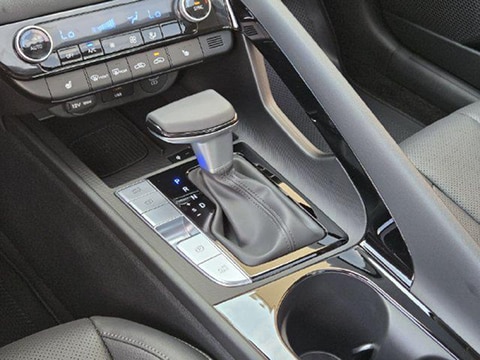
Every commute on the Dallas North Tollway feels a little different depending on traffic, weather, and how much patience you have left by 5 p.m. Hyundai builds multiple drive modes into its lineup for exactly this reason. With Hyundai Drive Modes, Plano drivers can pick the right setting whether they're running an errand or heading out to Grapevine Lake for the weekend. If you'd rather feel the difference yourself, browse our new inventory and schedule a test drive at Huffines Hyundai Plano.
What Are Hyundai Drive Modes and Why They Matter
Drive Mode Select lets you shift how your car behaves without touching a wrench. The same Tucson can feel noticeably different in Eco versus Sport, because the vehicle adjusts how it responds to your inputs behind the scenes. A relaxed throttle map that saves fuel on I-75 isn't ideal merging onto the tollway during rush hour, and a firm Sport setup that shines on a Hill Country back road is overkill at a school pickup line.
How Drive Modes Adjust Throttle, Steering, and Traction Control
Each mode adjusts throttle mapping (how much pedal travel it takes to get power), steering weight (resistance felt through the wheel), and, on AWD-equipped models, how torque splits between front and rear wheels. Transmission behavior shifts too, with some modes holding gears longer and others upshifting earlier to save fuel. None of this requires different hardware. It's all handled in software, which is why switching between modes feels instant.
Locating and Switching Drive Modes in Your Hyundai
Most Hyundai models place drive mode controls on a dedicated button or console switch. Newer models add MY DRIVE MODE, which lets you customize settings through Setup > Vehicle > Drive Mode on the infotainment screen. Menu steps vary by model year and software version, so if you can't find a setting right away, our service team can walk you through it. Switching modes while driving is designed to be safe, but it's best done at a steady speed on a straight stretch rather than mid-turn on a tollway ramp.
Normal Mode: The Balanced Choice for Everyday Plano Commutes
Normal is the default setting every Hyundai starts in each time you turn the key, regardless of what mode you had selected last. It doesn't display an indicator on the instrument cluster because it's meant to be the baseline everyone returns to. For the average commute between neighborhoods and North Texas job centers, Normal delivers smooth acceleration and a comfortable ride without asking you to think about it.
Eco Mode: Stretching Efficiency on Highways and Errands
Eco softens throttle response under moderate acceleration and adjusts the transmission's shift pattern to favor efficiency, which helps on longer highway stretches or repetitive errand runs. You may notice slightly louder engine noise at certain shifts, and air conditioner performance can be limited, which matters during a DFW summer when the AC is already working overtime.
On hybrid and electrified Hyundai models, Eco also changes how the electric motor engages and can automatically shift between 2WD and AWD to save energy. If efficiency is a top priority for your daily drive, it's also worth browsing our new Hyundai EV inventory, where electrified drivetrains take that efficiency further.
Sport Mode: Sharper Response for Confident Acceleration
Sport gives a firmer ride with more direct throttle response. The transmission holds gears longer, downshifts quicker, and delays upshifts, keeping the engine in a more responsive range. Steering tightens up, adding resistance and feedback through the wheel.
Fuel economy typically drops a bit, and a SPORT indicator lights up on the dash as a reminder. This setting suits merging onto the Dallas North Tollway at speed or tackling a curvier road toward Hill Country, where quicker throttle response and a locked-in feel come in handy.
Smart Mode: Adaptive Performance That Learns Your Style
Smart mode is often described as "learning" how you drive, but it's more accurate to say it responds in real time. It continuously judges your brake pedal and steering inputs and shifts among three internal states, SMART ECO, SMART NORMAL, and SMART SPORT. Gentle, steady inputs keep the vehicle in SMART ECO, moderate inputs move it into SMART NORMAL, and abrupt or harsh inputs push it into SMART SPORT. On HTRAC-equipped models, Smart mode can send up to 100% of torque to the front wheels when traction demands are low, prioritizing efficiency until conditions call for more grip.
This distinction matters if you've read owner debates about whether Smart mode builds long-term habits. It reacts to what you're doing right now rather than building a driver profile over weeks or months. Think of Smart as an automatic in-the-moment adjuster rather than a mode with memory. It's handy for drivers who'd rather not manually switch between Eco, Normal, and Sport depending on the block they're driving down.
Snow and Terrain-Focused Modes for Changing Conditions
North Texas doesn't see snow often, but when an ice event hits the Metroplex, having the right tools matters. Hyundai's Snow and terrain-focused modes exist for these less frequent but higher-stakes situations, adjusting traction settings to help the vehicle stay controlled on surfaces that don't offer much grip.
Snow Mode and HTRAC All-Wheel Drive Power Distribution
Snow mode, available on select AWD-equipped models like the Tucson, tunes traction control for slippery roads. It distributes power to reduce wheel slip and helps the vehicle start moving stably from a stop rather than spinning a tire. On HTRAC models specifically, Snow mode pre-distributes power to all four wheels and pulls away from a stop in 2nd gear to reduce torque shock. On electrified Hyundai models, regenerative braking also resets to its lowest level in Snow mode, since aggressive regen can upset traction on ice. For more detail, we've covered how Hyundai's HTRAC all-wheel-drive system works in a separate breakdown on our blog.
Snow mode helps manage power delivery, but it doesn't replace properly rated tires. If a Plano morning brings an unexpected ice patch, all-season tires still have their limits, and no drive mode changes that. Snow mode works alongside attentive driving and the right tires for the conditions; it can't do the job of either one alone.
Additional Terrain Modes Available on Select Models
Some Hyundai models go further with a dedicated Terrain Mode that adds Mud and Sand settings on top of Snow, each tuning throttle response, shift mapping, and traction control differently. Mud mode maintains momentum on soft or slippery ground, while Sand mode adjusts power delivery so the vehicle doesn't dig into loose terrain. These Terrain and Snow modes are exclusive to HTRAC AWD-equipped models, so they won't appear on every trim or drivetrain. The Santa Fe XRT, for example, pairs standard HTRAC with all-terrain tires and 8.3 inches of ground clearance, making it a stronger match for these modes than a front-wheel-drive configuration.
Matching the Right Mode to the Road Ahead
Picking the right mode comes down to matching the setting to what's actually happening on the road. A quick comparison makes the differences easier to see at a glance:
| Drive Mode | Throttle Response | Steering Feel | Transmission Behavior | Best Used For | Fuel Economy Impact |
|---|---|---|---|---|---|
| Normal | Standard, balanced | Standard weight | Default shift pattern | Daily commuting | Baseline |
| Eco | Slightly reduced under moderate throttle | Standard | Efficiency-focused shift pattern, possible louder shifts | Highway cruising, errands | Improved |
| Sport | Increased, more direct | Tightened, firmer | Holds gears longer, quicker downshifts | Merging, winding roads | Reduced |
| Smart | Adapts in real time (SMART ECO/SMART NORMAL/SMART SPORT) | Adapts with mode state | Adjusts based on driving inputs | Mixed driving without manual switching | Varies |
| Snow | Softened for stability | Standard | Adjusted for controlled starts, 2nd-gear launch on HTRAC | Icy or slippery roads | Varies |
| Terrain (Mud/Sand, select models) | Tuned per surface | Standard | Adjusted shift mapping for traction | Off-road, soft/loose surfaces | Varies |
Quick Reference: Matching Modes to Common Driving Scenarios
-
Rainy commute on the Dallas North Tollway: Snow mode for added traction control on wet, slick pavement.
-
Sudden icy morning in Plano: Snow mode, paired with cautious, slower driving.
-
Weekend trip to Grapevine Lake: Normal or Sport, depending on how much you enjoy the curves getting there.
-
Long summer highway drive during DFW heat: Eco mode, keeping in mind AC performance may be slightly limited.
-
Road trip to Hill Country or Oklahoma: Sport for the winding stretches, Normal for flatter highway miles.
-
Stop-and-go errands around Plano: Eco mode to stretch fuel efficiency between short trips.
Drive Mode Availability by Hyundai Model, Trim, and Drivetrain
Not every mode is available on every Hyundai, and availability depends heavily on drivetrain and trim. Snow mode specifically requires AWD hardware, so it won't appear on front-wheel-drive-only configurations. HTRAC, Hyundai's all-wheel-drive system, is offered on select Tucson, Santa Fe, Palisade, and Santa Cruz configurations, with the Palisade offering the largest HTRAC option in the range.
If you're deciding between Palisade trims, it's worth reading our comparison of the 2026 Palisade XRT Pro and Calligraphy trims to see how terrain-focused features stack up against Calligraphy's more comfort-oriented setup. Because configurations vary by model year and trim, we always recommend confirming exact mode availability for your specific vehicle before assuming a feature is included. Our team is glad to answer those questions directly through our contact form.
Experience Hyundai Drive Modes at Huffines Hyundai Plano
See the Difference in Person
Reading about throttle mapping and torque distribution only goes so far. Feeling a Tucson shift from Eco to Sport mid-drive, or noticing how Snow mode changes a launch from a stop, is a different kind of understanding entirely. At Huffines Hyundai Plano, our sales team can walk you through each mode on the model you're considering, and our service department can answer questions about how these systems interact with maintenance and software updates over time.
Schedule Your Test Drive
Located at 909 Coit Rd. in Plano, our team helps North Texas drivers make sense of every Hyundai drive mode well before they sign anything. If you're ready to feel the difference between Normal, Eco, Sport, Smart, and Snow side-by-side, stop by for a test drive and put each mode to the test on roads you actually drive every day.


