

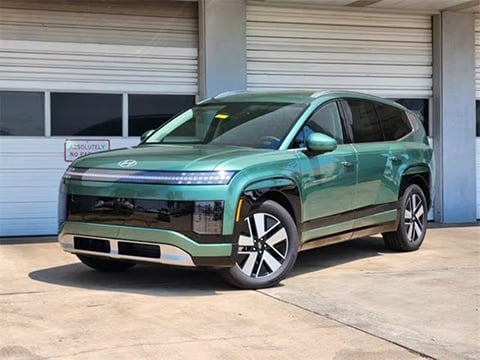
If you're shopping for an electric SUV in Plano, you may be debating between sticking with Tesla's proven Model Y or trying Hyundai's brand-new 2026 IONIQ 9. These aren't direct rivals but totally different takes on family transit. One's a compact five seater, while the other's Hyundai's first true seven-passenger electric flagship. Let's dig into which electric vehicle (EV) might work better for your family's needs in Texas.
Key Specifications at a Glance
Size is one of the biggest differences between these two EVs. The Model Y is 188.6 inches long, 78 inches wide, and 63.8 inches tall on a 113.8-inch wheelbase. The IONIQ 9 is much bigger, measuring 199.2 inches long, 78 inches wide, and 70.5 inches tall, with a 123.2-inch wheelbase. Tesla's smaller footprint helps with Plano parking, but those extra Hyundai inches create space for larger families.
Available in rear-wheel drive and all-wheel drive (AWD), Tesla's AWD Model Y produces 397 horsepower and 389 lb-ft of torque, hitting 327 EPA-rated miles. Hyundai offers options from a 215-horsepower single-motor to a muscular 422-horsepower dual-motor setup, all running on a larger 110.3 kWh battery. Every IONIQ 9 has up to 300 miles of range, with basic models reaching 335 miles.
When comparing the value of each electric SUV, the cheapest 2026 IONIQ 9 starts at $58,955, while the Model Y starts at $39,990. While the IONIQ is more expensive, you get more space and standard features. Plus, Hyundai gives you 10-year/100,000-mile powertrain coverage and an eight-year/100,000-mile battery warranty. Tesla only offers four-year/50,000-mile basic coverage and an eight-year/100,000-mile battery warranty.
Interior Space and Design
These SUVs serve completely different passenger needs. Tesla's Model Y offers five seats, while the IONIQ 9 delivers three-row functionality in an electric SUV. With 42.8 inches of legroom in the second row and 32 inches in the third, even 6-footers can sit comfortably way back there. You'll also find about 20 cubic feet of cargo space behind that third row, which grows to over 46.7 cubic feet when folded, and maxes out at 86.9 cubic feet with both rear rows down. The Model Y only offers up to 74 cubic feet of cargo space.
Luxury features further split these SUVs. The IONIQ 9 features swiveling second-row seats, a curved display panel, and comfort-focused touches, including massage seats made from sustainable materials. Those swiveling captain's chairs create a living room feel for Texas road trips, while Tesla sticks to its clean, minimal approach with good materials but fewer comfort extras.
Performance and Driving Experience
Driving feel reflects each brand's take on what makes a good EV. The IONIQ 9's AWD Performance dual-motor setup goes from 0 to 60 mph in about 4.4 seconds. Tesla's Performance Y is quicker at 3.3 seconds, but Hyundai's smoother power delivery feels better for family driving than Tesla's aggressive punch.
Thanks to improvements, the Model Y drives better than before, so you can expect a smoother, quieter ride, while the IONIQ 9 aims for comfort with its suspension tuning, running whisper-quiet with minimal road noise. For added utility, the IONIQ 9 tows 5,000 pounds, compared to the Model Y's 3,500-pound limit. You should consider this if you regularly haul boats or trailers around Texas.
Range, Charging, and Road Trip Readiness
Here's a look at how these EVs handle distances in Texas. The IONIQ 9 typically delivers between 300 and 335 miles, depending on wheels and trim. Tesla's Model Y gets slightly better range but still remains similar overall. Hyundai claims the IONIQ can charge from 10% to 80% in just 24 minutes on a 350 kW charger, right in Tesla territory for quick pit stops.
The IONIQ 9's second-generation platform features 800-volt charging, reducing wait times. The Model Y can add up to 160 miles in just 15 minutes with fast charging and benefits from Tesla's massive Supercharger network throughout Texas. The Model Y also offers great traction, an efficient heat pump, comfortable seating, and heated equipment for winter driving. Not to be outdone, the IONIQ 9 offers two-way charging to power tailgate gear or backup your home during Texas storms.
Technology and User Experience Differences
The IONIQ 9 combines two 12.3-inch displays behind a single glass panel, running Hyundai's newest operating system with wireless updates and app support. Tesla puts everything on a single large 15.4-inch center screen, with a revamped interior, reshaped wheel, ventilated seats, and nicer materials.
Hyundai gives you Highway Driving Assist for nearly hands-free cruising and blind-spot cameras that show live video when you signal. It uses multiple sensor types as backups. Tesla relies only on cameras for Autopilot and Full Self-Driving.
You'll find a variety of fun and wellness extras in each SUV. Tesla's back seats get their own screen for Netflix, YouTube, and Twitch, plus power-folding capability and separate rear air conditioning. The IONIQ 9 adds health features such as a UV-C sanitizer tray and Smart Cruise with Stop & Go, and Hyundai Bluelink to create a better overall experience.
Hyundai IONIQ vs. Tesla Y: Which SUV Fits Your Lifestyle?
The Model Y may shine as a five-person SUV for a smaller family that loves performance and technology, offering excellent access to the charging network and a sporty feel. The IONIQ 9 offers more space and true three-row comfort, breaking ground as the first true premium three-row electric SUV. It's the better pick if you have a large family that regularly needs seven seats.
When you're ready to try the 2026 Hyundai IONIQ 9 yourself, drop by Huffines Hyundai Plano for a test-drive. Our team can help determine whether this impressive electric family hauler fits your North Texas driving life.


